SourcingAI

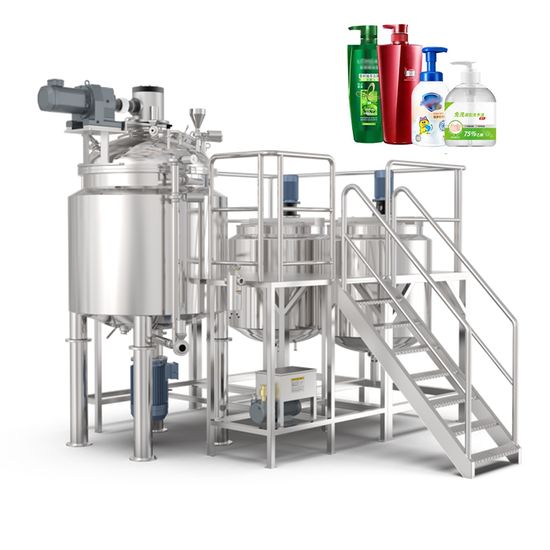
Stainless steel emulsifying tank

I have found results from40000+products and10000+suppliers aboutStainless steel emulsifying tank

Commonly Used:
US$
—
Customization Available
Sample Available
Manufacturer First
Product Attributes:
High Shear Homogenizer
Type: Tank Container
Type: Tank Reactor
Type: Rotor-Stator Homogenizer
High Speed Mixer
Stirring Type: Gravity
Liquid with Suspended Solids
Certification: CE
Application Area: Daily Chemical
Mixing Drum Shape: Drum
Additional Capabilities: Milling
Condition: New
Main Material: Stainless Steel
Rotation Speed: >1000rpm
Online Support, video Technical Support
Cooling Method: Air Cooling
Heating Method: Electric Heating
Warranty: 1 year
Control System: Button Control
1000L & Above
Speed Control: Variable Speed
60 R/min & Above
With Cooling System
Animal Raw Materials
Customized: Customized
Power Source: Electric
Automatic Grade: Semi-Automatic
Insulation Material: Mineral Wool
Tank Marerial: Metal Tank
Storage Objects: Solid
Material: Stainless Steel
Agitator Model: Paddle Agitator
Oil Circulation Heating
Heat Transfer Structure: Jacketed
Working: Shear Mixer
Working: Diffusion Mixer
Working: Convection Mixer
Stirring Type: Spiral
Stirring Type: Diving
Application: Powder
Application: Viscous Fluid
Application: Liquid
Application: Granules
Application: Pet Food
Application: Chocolate
Application: Ice Cream
Application: Vegetable
Application: Fruit
Application: Dairy
Application: Beverage
Application: Milk
Application: Yogurt
Application: Milk Powder
Application: Cheese
Certification: ISO
Certification: CCC
Certification: ISO9001
Certification: GMP
Certification: GOST
Certification: SONCAP
Certification: API
Certification: QS
Certification: GS
Certification: TUV
Certification: GB
Application Area: Chemical
Application Area: Agricultural Chemicals
Engineering & Construction
Application Area: Food
Application Area: Pharmaceutical
Application Area: Metallurgy&Mineral
Mixing Drum Shape: Disc
Mixing Drum Shape: Conical
Mixing Drum Shape: Circular Groove
Mixing Drum Shape: Double Cone
Additional Capabilities: Coating
Additional Capabilities: Vacuum
Additional Capabilities: Drying
Additional Capabilities: Granulating
Main Material: Carbon Steel
Main Material: Alloy Steel
Main Material: Aluminum
Main Material: Cast Iron
Engineers Available to Service Machinery Overseas
Free Spare Parts
Cooling Method: Water Cooling
Heating Method: Steam Heating
Hot Air Heating
Control System: PLC Control
Mixing Capacity: 500-999L
Mixing Capacity: 100-249L
Mixing Capacity: 50-99L
Mixing Capacity: 50-100L
Speed Range: 30-39 R/min
Temperature Control: With Heating
Processing Material: Forest Products
Processing Material: Natural Ingredients
Automatic Grade: Automatic
Automatic Grade: Manual
Insulation Material: Fiberglass
Insulation Material: Polyurethane
Storage Objects: Liquid

Sourcing guidance for Stainless Steel Emulsifying Tank

What are the key technical specifications to consider when selecting a stainless steel emulsifying tank?

Buyers should prioritize high-grade Stainless Steel 304 or 316L for superior corrosion resistance. The surface roughness (Ra) should be ≤ 0.4μm for internal walls to meet sanitary standards. Additionally, verify the homogenizer speed, typically ranging from 2,800 to 3,600 RPM, and ensure the vacuum degree can reach -0.09Mpa to prevent aeration during the mixing process.

Which industry compliance standards are mandatory for emulsifying tanks?

For pharmaceutical and cosmetic applications, the equipment must strictly adhere to GMP (Good Manufacturing Practice) standards. Ensure the supplier provides CE certification for the European market or ASME U-stamp for pressure vessels if required. ISO 9001 quality management systems are a baseline requirement to ensure consistent manufacturing processes.

How do I evaluate the heating and cooling efficiency of the tank?

Look for tanks with a triple-layer structure (inner tank, jacket, and insulation). The jacket should be designed for steam or electric heating and be capable of rapid cooling via water circulation. High-density polyurethane or rock wool should be used for insulation to minimize energy loss and ensure operator safety by maintaining a cool outer shell.

What functional configurations are essential for high-viscosity materials?

For thick products like creams or ointments, a dual-way agitator system is critical. This includes a central paddle stirrer and an outer anchor stirrer with PTFE scrapers to prevent material from sticking to the walls. A bottom-entry or top-entry high-shear homogenizer is necessary to achieve a particle size of 2-5μm.

Cross-Border Procurement & Risk Management for Industrial Equipment

How can I mitigate the risk of receiving substandard industrial machinery?

Always request a Pre-Shipment Inspection (PSI) conducted by a third-party agency like SGS or Intertek. Specifically, ask for a Fat (Factory Acceptance Test) video showing the machine running with water or a simulant. Use Made-in-China.com's Secured Trading services to ensure payment is only released after the bill of lading is verified.

What are the best practices for negotiating with heavy equipment suppliers?

Focus on the Total Cost of Ownership (TCO) rather than just the unit price. Negotiate for spare parts kits (seals, gaskets, and heating elements) to be included in the initial price. Demand a 12 to 24-month warranty and clarify the supplier's ability to provide remote technical support or video-guided installation.

What shipping precautions should be taken for large stainless steel tanks?

Due to the polished surface and sensitive components, the tank must be packed in a fumigated wooden case with internal vacuum plastic wrapping to prevent sea salt corrosion. Ensure the machine is bolted to the base of the crate to prevent shifting. For large-scale tanks, consider Flat Rack containers if the dimensions exceed standard 40HQ limits.

How do I handle international trade policy and customs compliance?

Verify the HS Code (typically 8479.82) to determine import duties in your country. Ensure the supplier provides a Certificate of Origin (e.g., Form E or Form F) to leverage potential Free Trade Agreements (FTA) which can significantly reduce or exempt customs duties.

Related queries