
Satisfies 1 requirement
Factory Wholesale Super Market Shopping Foldable Shopping Bag Market Trolley for Grocery and Retail Store
US$3.99-6.99
300 Pieces(MOQ)

I have found results from30000+products and10000+suppliers aboutShopping trolley factory


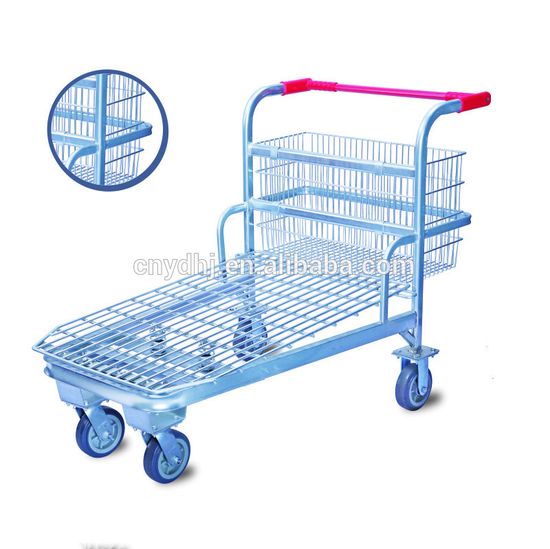


When sourcing from a Shopping Trolley Factory, you must prioritize load capacity and material durability. Standard retail trolleys should support at least 80kg to 150kg depending on volume (60L to 240L). Ensure the frame is made of high-tensile steel with a wire diameter of 3.0mm to 6.0mm. For the finish, zinc plating plus a clear powder coating is the industry standard to prevent corrosion and maintain a professional appearance over a 5-10 year lifespan.
High-quality trolleys must use PU (Polyurethane) or TPR (Thermoplastic Rubber) wheels to ensure noise reduction and floor protection. Demand ball-bearing swivels for 360-degree maneuverability. For specialized environments like supermarkets with travelators, ensure the factory provides elevator-compatible wheels with grooves that lock into the walkway for safety.
To ensure safety and market access, verify that the factory adheres to EN 1929-1:1998 (European standard for basket trolleys) or ISO 9001 for quality management. If the trolley includes a child seat, it must comply with ASTM F2372 or EN 1929-2/3 to ensure the safety belt and leg-hole dimensions prevent accidents. Always request CE certification for European exports.
Yes, professional factories offer customized handle logos and color-matched plastic bumpers and corner protectors. To reduce shrinkage, consider integrating coin lock systems (compatible with local currency) and RFID tags for inventory tracking. Ensure the factory can provide CAD drawings for custom handle designs before mass production.
Shopping trolleys are 'air-heavy' goods. To maximize container utilization, choose nestable designs that allow trolleys to slide into one another. A standard 40HQ container can typically hold 300-500 units depending on the liter size. Negotiate FOB (Free On Board) terms to maintain control over your freight forwarder and ensure the factory uses protective bubble wrap or palletization to prevent scratching during transit.
The primary risk is material substitution (e.g., using lower-grade steel that rusts quickly). We highly recommend using Made-in-China.com's 'Audited Supplier' reports to verify the factory's production capacity and equipment. For large orders, hire a third-party inspector to perform a Salt Spray Test (minimum 48-72 hours) to verify the anti-rust coating quality before the final payment.
Use Trade Assurance or Letters of Credit (L/C) for large transactions to secure your funds. Typical lead times for a full container are 25-35 days. Always include a penalty clause in the contract for delays exceeding 14 days. For first-time buyers, a 30% deposit and 70% balance against the Bill of Lading (B/L) is the standard and safest negotiation starting point.