
Satisfies 1 requirement
High-Voltage Indoor Vacuum Breaker for Superior Safety Solutions
US$500.00-1,000.00
1 Piece(MOQ)

I have found results from200000+products and80000+suppliers aboutSafety breaker


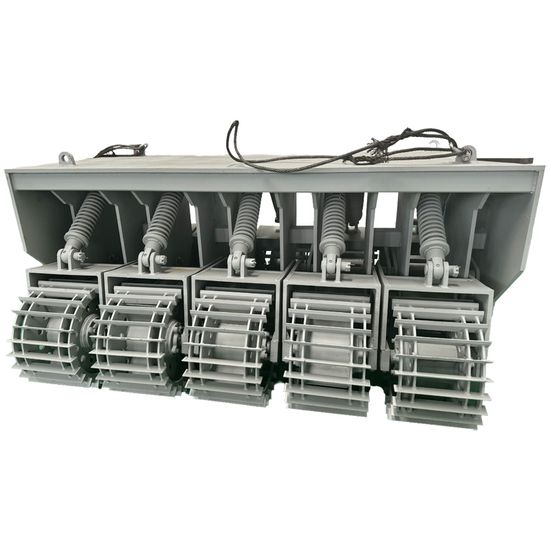


When selecting a safety breaker, you must match the Rated Current (In) and Rated Voltage (Un) to your specific application. For residential use, 6A to 63A is standard, while industrial needs may require higher capacities. Crucially, verify the Breaking Capacity (Icn); for standard home use, 6kA is usually sufficient, but industrial environments often demand 10kA or higher to safely interrupt short-circuit currents without damaging the device.
Compliance is non-negotiable for electrical safety. Ensure the products carry the IEC/EN 60898-1 standard for household breakers or IEC/EN 60947-2 for industrial applications. For specific regions, look for CE marking (Europe), UL listing (North America), or CCC certification (China). Always request valid test reports from accredited third-party labs like TUV, Intertek, or SGS to ensure the product meets safety benchmarks.
Identify if you need a standard MCB (Miniature Circuit Breaker) for overcurrent protection, or an RCCB/RCBO (Residual Current Device) for protection against electric shock and leakage. For high-precision equipment, look for Type B or Type C tripping curves. If the installation environment is harsh, prioritize breakers with flame-retardant shells (UL94-V0 rating) and high-quality silver alloy contacts to ensure long-term electrical conductivity and heat resistance.
Check the Mechanical Life (number of manual operations) and Electrical Life (number of trips under load). High-quality safety breakers should support at least 20,000 mechanical cycles and 10,000 electrical cycles. Ask the supplier for internal structure photos to verify the thickness of the copper busbars and the quality of the arc-extinguishing chamber, which are critical for preventing fire hazards.
The biggest risk is counterfeit or sub-standard internal components (e.g., using copper-clad aluminum instead of pure copper). This can lead to failure during a power surge, causing fires. To mitigate this, use Made-in-China.com's 'Audited Supplier' reports to verify the factory's manufacturing capabilities and quality control systems before placing a bulk order.
Negotiate a 'Sample-to-Mass Production' consistency clause in your contract. Specify that the internal components of the bulk order must match the approved sample. Demand a Pre-Shipment Inspection (PSI) where a third party randomly tests the tripping mechanism and insulation resistance of the units from the actual production lot.
Safety breakers contain delicate mechanical parts. Ensure the supplier uses export-standard 5-layer corrugated boxes with internal dividers to prevent vibration damage. For sea freight, request moisture-proof packaging (silica gel packets and plastic wrapping) to prevent oxidation of the metal terminals during long-distance transit.
Always use secure payment methods provided by reputable platforms. On Made-in-China.com, utilize the Secured Trading Service to ensure your payment is only released to the supplier after you have confirmed receipt and inspected the goods. This protects your capital against non-delivery or significant quality deviations.