
Satisfies 1 requirement
5 Axles Flatbed Trailer 16m 60-100t Low Bed Truck Trailer Flat Bed Semi Trailer Heavy Machinery Transportation Low Plate Semi Trailer Lowboy Lowbed Trailer
US$7,600.00-10,000.00
1 Piece(MOQ)

I have found results from200000+products and60000+suppliers aboutPlate trailer


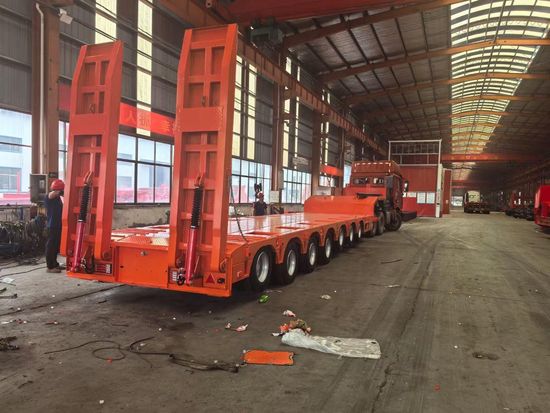
When sourcing a plate trailer, the load capacity is the most critical factor; ensure the axle rating (e.g., 13T, 16T) and suspension system match your intended cargo weight. Pay close attention to the main beam material, typically Q345B or high-tensile steel, and the welding process (submerged arc welding) to ensure structural integrity. Additionally, verify the floor plate thickness (usually 3mm-8mm) and whether it features a checkered anti-slip design for safety during loading.
Buyers must ensure the manufacturer holds ISO 9001 certification for quality management. For specific markets, the trailer must meet DOT (Department of Transportation) standards for the US, CE marking for Europe, or ADR (Australian Design Rules). Verify that the braking system (ABS/EBS) and lighting systems comply with the destination country's road safety regulations to avoid customs clearance issues.
For long-haul logistics, prioritize aerodynamic designs and low-rolling-resistance tires to improve fuel efficiency. If the trailer is used in construction or mining, opt for reinforced mechanical leaf spring suspension and heavy-duty landing gear (e.g., JOST brand). For maritime port operations, a skeletal plate trailer specifically designed for ISO containers (20ft/40ft) with high-quality twist locks is essential.
Look for trailers equipped with centralized lubrication systems to reduce wear on moving parts. The surface treatment is vital; prioritize sandblasting followed by polyurethane paint or hot-dip galvanizing to provide superior corrosion resistance, especially for trailers operating in humid or coastal environments. Ensure that spare parts like brake pads and air bags are of standard sizes for easy replacement locally.
Always conduct a factory audit or hire a third-party inspection agency (like SGS or Intertek) to verify the production capacity and product quality before final payment. Use Secure Payment services provided by platforms like Made-in-China.com to ensure funds are only released upon confirmation of shipment. Request a Video Inspection of the specific VIN (Vehicle Identification Number) to ensure the unit produced matches your order specifications.
To reduce freight costs, consider Bulk Cargo (Breakbulk) or RO-RO (Roll-on/Roll-off) shipping, which is safest for fully assembled trailers. For high-volume orders, some suppliers offer SKD (Semi-Knocked Down) kits where multiple trailers are stacked and shipped in a 40HC container, potentially saving up to 30-50% on shipping costs, though this requires local assembly capabilities.
Focus on the Total Cost of Ownership (TCO) rather than just the sticker price. Negotiate for extended warranties on the main beam (typically 2-5 years) and request a wear-parts package (filters, seals, brake linings) to be included in the initial purchase. For orders exceeding 5 units, leverage the volume to request custom branding (OEM) and upgraded tire brands (e.g., Michelin or Triangle) at a discounted rate.
Verify the supplier's Export License and their history of shipping to your specific region to ensure they understand local Import Duties and Tariffs. Utilize Trade Terms (Incoterms) like CIF or DAP clearly in the contract to define responsibility for insurance and risk. Always cross-reference the HS Code (typically 8716.39) with your local customs office to calculate accurate tax obligations before finalizing the deal.