
Satisfies 1 requirement
Custom Rubber Parts Anti Slip Ladder Cover Rubber Feet for Scaffolding Aluminum Ladder
US$0.50-0.90
100 Pieces(MOQ)

I have found results from10000+products and3000+suppliers aboutLadder rubber feet


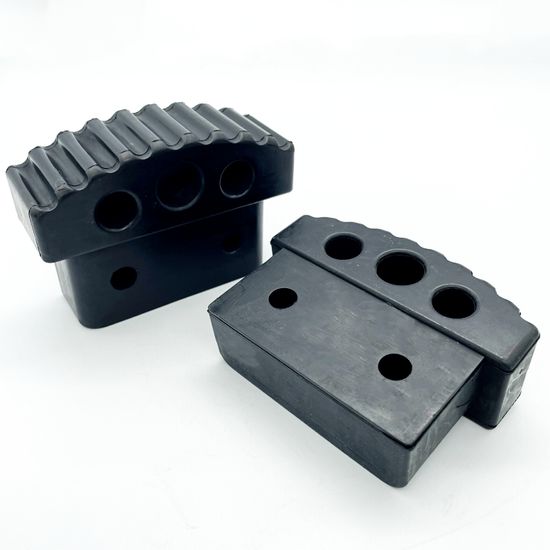


When sourcing ladder rubber feet, prioritize Natural Rubber (NR) or Synthetic Nitrile Rubber (NBR) for their superior abrasion resistance and anti-slip properties. Ensure the material has a Shore A Hardness rating of 60-80 to balance flexibility with structural integrity. For outdoor or industrial use, verify that the rubber compound includes UV stabilizers and ozone-resistant additives to prevent cracking and degradation over time.
Safety is paramount for ladder accessories. You must confirm that the products comply with EN 131 (European Standard for Ladders) or ANSI A14 (American National Standards Institute) requirements regarding slip resistance and load-bearing capacity. Additionally, ensure the materials are REACH or RoHS certified to guarantee they are free from hazardous substances like phthalates or heavy metals, which is critical for entry into EU and North American markets.
Look for a deep-tread pattern or ribbed bottom design which increases the surface area and friction on various terrains. For telescopic or extension ladders, swivel-base designs are preferred as they maintain full contact with the ground at different angles. Ensure the internal dimensions of the feet match the ladder rail profile (e.g., rectangular, D-rung, or round) with a tight-fit tolerance to prevent the feet from slipping off during use.
Request a Material Data Safety Sheet (MSDS) and a third-party friction test report. To optimize costs, look for suppliers on Made-in-China.com that offer OEM/ODM services, allowing for custom molds that fit your specific ladder models. A Minimum Order Quantity (MOQ) of 500-1,000 sets usually unlocks bulk discounts of 15-25%, significantly reducing the unit cost for large-scale distributors.
The primary risk is material substitution, where a supplier uses recycled rubber or high-filler content to lower costs, leading to premature failure. To mitigate this, use Trade Fulfillment services on Made-in-China.com and mandate a Pre-Shipment Inspection (PSI). Specifically, request a compression set test to ensure the rubber returns to its original shape after heavy loading.
Negotiate a Quality Assurance Agreement (QAA) that defines the acceptable AQL (Acceptable Quality Level), typically 1.0 for critical defects (like splitting). Insist on a sample approval process where the golden sample is sealed and kept for comparison against the mass production batch. Discuss mold ownership upfront if you are paying for custom tooling to ensure you retain the rights to your design.
Since rubber feet are high-density and relatively heavy, Sea Freight (LCL or FCL) is the most cost-effective method for bulk orders. For urgent replenishment, Air Freight is viable but will significantly impact your margins. Ensure the supplier uses heavy-duty corrugated cartons and palletization to prevent the rubber from being deformed under the weight of stacked boxes during long-transit maritime shipping.
Always conduct transactions through secured payment channels provided by reputable platforms like Made-in-China.com to protect your funds until delivery is confirmed. Verify the HS Code (typically 4016.99) for rubber articles to accurately calculate import duties and VAT in your destination country, avoiding unexpected customs delays or fines.