
Satisfies 1 requirement
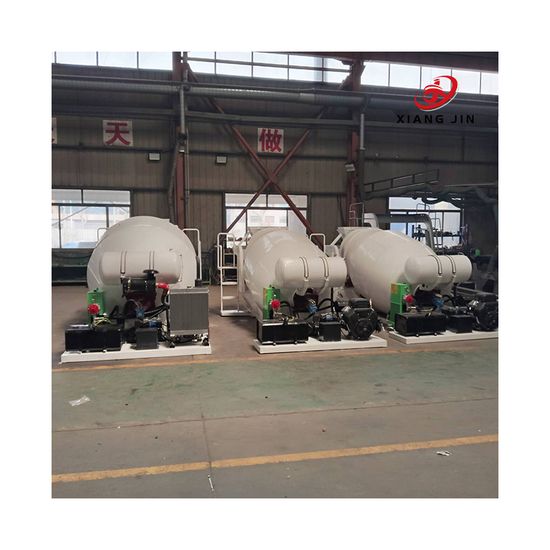
Factory Concrete Mixer Truck Mounted Drum Mixer Truck Cement Mixing Tank 2, 3, 4, 5, 6, 7, 8, 9, 10, 11, 12, Cubic Meters
US$4,600.00-4,900.00
1 Piece(MOQ)

I have found results from200000+products and60000+suppliers aboutCement tank




Selecting the material depends on your balance between durability and payload. Carbon steel is the most common and cost-effective choice for heavy-duty use, while aluminum alloy tanks offer a lighter tare weight, allowing for a higher legal payload and better fuel efficiency. For capacity, standard international models range from 25m³ to 60m³. Ensure the volume matches your local axle load regulations to avoid legal issues during transport.
The efficiency of a cement tank is measured by its discharge speed and residual rate. Look for a system that achieves a discharge speed of ≥1.2t/min and a residual rate of <0.3%. High-quality tanks should feature a double-intake air system and a fluidized bed with a steep angle (usually >20 degrees) to ensure smooth powder flow. Verify the brand of the air compressor (e.g., Bohai or Fuda) as it is the heart of the discharge operation.
For cross-border procurement, the tank must adhere to pressure vessel safety standards. Ensure the manufacturer provides ISO 9001 certification and regional approvals such as DOT (USA), ADR (Europe), or SABS (South Africa). Safety features must include anti-explosion manhole covers, dual safety valves, and reflective marking tapes that comply with international road safety conventions.
The tank body undergoes significant pressure; therefore, automatic longitudinal welding is superior to manual welding for consistency and strength. Request X-ray flaw detection reports for the weld seams. The exterior should be treated with shot blasting and polyurethane paint to provide high corrosion resistance, which is critical for equipment exposed to harsh construction site environments.
The biggest risks include structural deformation during sea transit and specification mismatch. To mitigate this, use Third-Party Inspection (TPI) services like SGS or Intertek to verify the steel thickness and pressure tests before balance payment. Always source through reputable platforms like Made-in-China.com to utilize trade security services.
Cement tanks are bulky. To reduce costs, consider Bulk Cargo ships or Ro-Ro (Roll-on/Roll-off) shipping to prevent damage. If shipping multiple units, ask the supplier if they can offer a 'SKD' (Semi-Knocked Down) solution or if the tanks can be stacked/nested (if the design allows) to save on freight volume.
Focus on the Total Cost of Ownership (TCO) rather than just the sticker price. Negotiate for wearing parts packages (like discharge hoses, seals, and air bags) to be included in the initial price. For bulk orders of 5+ units, aim for a 5-10% discount or an extended warranty period of 18-24 months on the main structure.
Always use Letter of Credit (L/C) for large industrial purchases or Escrow-based payments provided by Made-in-China.com. Never wire full payments to private accounts; ensure the beneficiary name matches the registered company name on the business license and export permits.