

Air volume damper price
I have found results from10000+products and7000+suppliers aboutAir volume damper price
Commonly Used:
US$
—
Customization Available
Sample Available
Manufacturer First
Product Attributes:
Type: Fusion Welding
Type: Sheet
Type: Epoxy FRP
Type: Venetian-Style Outlet
Type: Air Grille
Type: Round Diffuser
Type: Self-Operated
Surface Treatment: Polishing
Energy Source: Electric Arc
Material: SHCC
for Air Conditioner
Shape: Round
ventilation mode: mechanical ventilation
Certification: CE
Pressure: High Pressure
Outside Gate Valve
Application: Industrial Usage
Standard: ASTM
Stainless Steel Scrap
Technique: Cold Drawn
Special Use: Silicon Steel
Media: Gas
Molding Method: Molding
Fiber Type: GFRP
Flow Direction: Axial Flow
Air Tube Material: Galvanized Sheet
Noise Level: Low
Mounting: Wall/Window Mount
Lifetime: >20 years
Condition: New
Venetian-Style Air Layers: Single
Installation: Outlet
Power Source: Electric Power
Connection: Flange
Temperature: High Temperature
Connection Mode: External Thread
Power: Manual
Surface Treatment: Galvanized
Surface Treatment: Gel Coat
Material: Galvanized Sheet
Material: FRP
Material: Iron
Material: Aluminum
Material: Stainless Steel
Usage: Industrial
Usage: Temperature Control
Usage: Flow Control
Usage: Environmental Protection
Usage: Industral
Usage: for Manufacture
Usage: for Experiment
Usage: for Refrigerate
Usage: for Firefighting
Shape: Plate
ventilation mode: natural ventilation
Certification: CCC
Certification: ISO
Certification: EAC
Certification: TUV
Certification: GOST
Certification: ISO9001
Certification: ROHS
Application: Household Usage
Application: Ship Plate
Application: Home
Standard: DIN
Standard: Standard
Cold Heading Steel
Installation: Duct Fans

Satisfies 1 requirement
Balancing Air Duct Regulator Damper Manual Air Volume Damper
US$5.00-20.00
100 Pieces(MOQ)

Satisfies 1 requirement
Factory Price Hot Sale HVAC Electric Motorized Damper Air Volume Control Damper Carton Silver OEM Modern Galvanized Steel 80-315
US$4.00-15.00
200 Pieces(MOQ)

Satisfies 1 requirement
Air Volume Control Fireproof Damper with Switches Control in HAVC System
US$60.00-170.00
1 Piece(MOQ)

Satisfies 1 requirement
Stainless Steel Air Ducting Round Volume Control Damper
US$27.90-29.80
100 Pieces(MOQ)

Satisfies 1 requirement
Factory Price PVC/PP Manual Air Valve /Butterfly Damper Valve Manual for Control The Air Volume
US$1.50
100 Pieces(MOQ)

Satisfies 1 requirement
Motorized Exhaust Air Damper for Duct Volume Control
US$10.00-100.00
1 Piece(MOQ)

Satisfies 1 requirement
High Air Flow Anti-Corrosion Air FRP Volume Damper FRP Damper Fittings Fibreglass Reinforced Plastic Volume Damper for Ventilation Industry
US$10.00-200.00
5 Pieces(MOQ)

Satisfies 1 requirement
100mm 220V Electric Ventilation Air Volume Control Damper
US$6,600.00-8,000.00
1 Set(MOQ)

Satisfies 1 requirement
HVAC Hardware Round Duct Air Volume Control Damper for Airflow Regulation
US$0.95-1.30
100 Pieces(MOQ)

Satisfies 1 requirement
Actuator Fitted Air Volume Damper for Ventilation Duct Project
US$20.00-30.00
10 Pieces(MOQ)

Satisfies 1 requirement
Manual and Motorized Air Volume Damper for Air Conditioning Duct
US$10.00-50.00
1 Piece(MOQ)

Satisfies 1 requirement
Made in China Air Volume Control Opposed Blades Damper Price
US$6.00-8.00
20 Pieces(MOQ)

Satisfies 1 requirement
China Suppliers Air Volume Opposed Blades Control Damper Price
US$6.00-8.00
20 Pieces(MOQ)

Satisfies 1 requirement
Air Ventilation Ceiling Damper Manual Round Shape Volume Control Damper
US$30.00-36.00
10 Pieces(MOQ)

Satisfies 1 requirement
HVAC Standard Stainless Steel Electric Motorized for Air Damper Modern Design Volume Control Dampers Actuator for Ducts
US$10.30-12.50
10 Pieces(MOQ)

Satisfies 1 requirement
70 280 Degrees Electric Fire Damper Manual Air Volume Control Valve Pipe Fire Smoke Exhaust Fire Damper-HVAC Systems Parts
US$67.00-100.00
10 Pieces(MOQ)

Satisfies 1 requirement
HVAC New Galvanized Steel Manual Round Volume Control Air Duct Damper
US$1.50-5.60
1 Piece(MOQ)

Satisfies 1 requirement
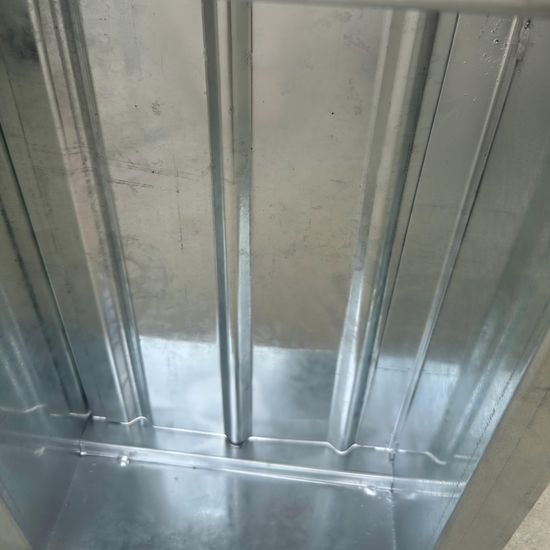
Galvanized Sheet Rectangular Duct Air Volume Balancing Manual Adjustment Damper
US$15.00-80.00
1 Piece(MOQ)
Satisfies 1 requirement
HVAC Duct Galvanized Manual Opposed Blades Air Volume Control Damper Used for Ventilation Fire Protection System
US$15.00-80.00
1 Piece(MOQ)

Satisfies 1 requirement
Factory Price Ventilation Rapid Air Volume Damper Regulators
US$0.50-0.60
1,000 Pieces(MOQ)

Satisfies 1 requirement
China Factory Price Regulating Air Volume Control Damper Regulating Damper
US$0.96-2.00
500 Pieces(MOQ)

Satisfies 1 requirement
Factory Price OEM HVAC Parts 220V Pipe Fitting Plastic Air Volume Control Motor Round Air Duct Volume Control Damper for Ventilation
US$11.00-18.00
500 Pieces(MOQ)

Satisfies 1 requirement
Factory Price Air Duct Manual Regulation Damper Volume Control Damper Ventilation Regulator Damper Regulating Damper for HVAC System
US$0.96-1.52
100 Pieces(MOQ)

Satisfies 1 requirement
HVAC Accessories Handle Zinc Plated Steel Stand off Quadrant Sets Volume Damper Quadrant Set for Air Duct
US$0.35-1.50
2,000 Pieces(MOQ)


Satisfies 1 requirement
HVAC Systems Air Volume Control Bellmouth Spigot Damper
US$4.00-4.50
200 Pieces(MOQ)

Satisfies 1 requirement
HVAC Ventilation Automatic Electric 24V Motorized Air Duct Volume Control Damper
US$15.00
100 Pieces(MOQ)

Satisfies 1 requirement
Custom Made SUS304 Adjustable Air Volume Control Valve Airflow Regulating Damper
US$1.00-200.00
1 Piece(MOQ)

Satisfies 1 requirement
Air Volume Control Damper, Electric Airflow Regulation Damper, for HVAC Ducts.
US$20.00-60.00
1 Piece(MOQ)
Sourcing guidance for Air Volume Damper Price
How to choose the right material for an Air Volume Damper based on the environment?
Selecting the correct material is critical for longevity. For standard HVAC systems, Galvanized Steel is the most cost-effective and common choice. However, for high-humidity environments or chemical exhaust, Stainless Steel (304 or 316) is mandatory to prevent corrosion. In specialized industrial cleanrooms or lightweight applications, Aluminum Alloy dampers are preferred due to their oxidation resistance and lower weight.
What are the key technical specifications to verify before purchasing?
Buyers must confirm the Air Leakage Class (e.g., Class 1 or Class 2 according to EN1751) to ensure energy efficiency. Additionally, check the Blade Type (opposed blade vs. parallel blade); opposed blades are superior for precise volume control, while parallel blades are better for simple on/off functions. Ensure the Actuator Torque (measured in Nm) is sufficient to drive the damper size under maximum air pressure.
Which compliance standards should international buyers look for?
For fire safety, ensure the dampers meet UL 555 (Fire Dampers) or UL 555S (Smoke Dampers) standards if they are part of a life-safety system. For general ventilation, look for AMCA (Air Movement and Control Association) Certification, which guarantees that the performance data provided by the manufacturer is accurate and tested.
How does the drive mode affect the price and application?
Dampers come in Manual and Motorized versions. Manual dampers are significantly cheaper and suitable for balancing systems that rarely change. Motorized dampers (electric or pneumatic) are more expensive but essential for automated Building Management Systems (BMS). When sourcing from Made-in-China.com, specify the required voltage (24V or 220V) and signal type (on/off vs. modulating 0-10V) to get accurate pricing.
Cross-Border Procurement & Risk Management for Air Volume Dampers
How can I mitigate the risk of receiving damaged or non-compliant dampers?
Request a Pre-Shipment Inspection (PSI) to verify the dimensions, material thickness (gauge), and motorized operation. Since dampers are often bulky, ensure the supplier uses reinforced plywood crates rather than simple cartons to prevent frame warping during sea freight. Always use Secure Payment services on Made-in-China.com to protect your funds until the bill of lading is issued.
What are the strategies for negotiating the best price for bulk HVAC components?
Focus on the Total Cost of Ownership (TCO). Negotiate for tiered pricing where the unit cost drops by 10-20% for full container loads (FCL). Ask the supplier if they can provide OEM branding at no extra cost for large orders. Additionally, check if the supplier can consolidate other HVAC accessories (like grilles or diffusers) to reduce overall shipping costs.
What should I consider regarding international shipping and customs for metal dampers?
Be aware of Anti-Dumping Duties that some countries impose on specific steel products. Ensure the supplier provides a detailed HS Code (typically 7326 or 8481) to accurately calculate import tariffs. For shipping, FOB (Free On Board) is recommended for experienced buyers to maintain control over freight costs, while DDP (Delivered Duty Paid) is better for those who want a hassle-free door-to-door delivery.