
Satisfies 1 requirement
3 Axle 40FT 45FT Flatbed Container Semi Trailer 30-80 Ton Heavy Duty Container Chassis for Container Transport
US$6,000.00-9,500.00
1 SET(MOQ)

I have found results from100000+products and30000+suppliers about40ft trailer


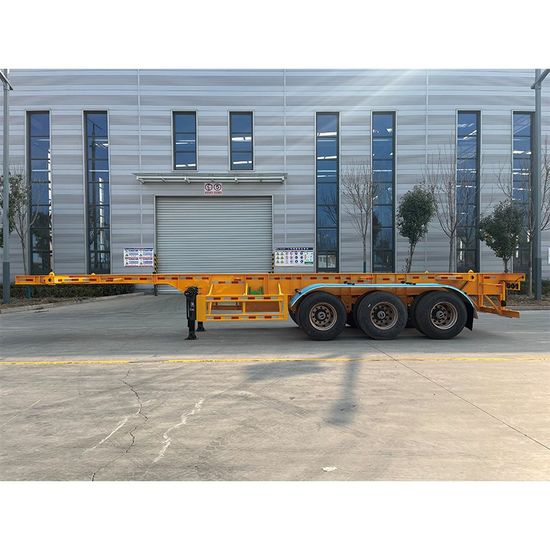

Selecting the correct 40ft trailer depends heavily on the cargo type. For standard shipping containers, a 40ft Skeleton Trailer (Chassis) is the most cost-effective and lightweight option. If you are transporting bulk goods or machinery, a 40ft Flatbed Trailer with high-strength steel (like Q345B) is essential. For temperature-sensitive goods, prioritize Refrigerated Trailers (Reefers) with integrated thermal insulation. Always verify the axle configuration (2-axle vs. 3-axle); a 3-axle setup is generally preferred for international trade as it offers better weight distribution and a higher payload capacity of up to 60 tons.
Buyers must ensure the trailer meets international safety and quality benchmarks. Key specifications include Main Beam height (usually 500mm) and Flange thickness (14mm/6mm/16mm) to prevent sagging under heavy loads. Ensure the braking system utilizes WABCO Emergency Valves and ABS (Anti-lock Braking System) for operational safety. Compliance-wise, look for ISO 9001 certification, DOT (Department of Transportation) standards for North America, or CE marking for Europe. Additionally, verify that the Kingpin (2" or 3.5") and Landing Gear (JOST brand is the industry gold standard) are compatible with your existing tractor units.
Durability is determined by the welding technology and surface treatment. Prioritize suppliers using Automatic Submerged Arc Welding for the main beams to ensure structural integrity. The chassis should undergo sandblasting followed by polyurethane painting or hot-dip galvanization to provide superior corrosion resistance, especially for cross-border sea transport. Request a loading test report and check the brand of the axles; FUWA or BPW axles are highly recommended for their global availability of spare parts and proven longevity in harsh road conditions.
40ft trailers are primarily used in port logistics, long-haul trucking, and construction sites. Customization is a key advantage in B2B procurement; you can request side walls for loose cargo, twist locks for securing 1x40ft or 2x20ft containers, or mechanical/air suspension depending on the road conditions of the destination country. For heavy-duty mining environments, reinforced leaf springs and thickened floor plates (up to 3mm checkered plate) are necessary to withstand impact.
The biggest risks include structural failure due to poor welding and shipping damage. To mitigate these, use Made-in-China.com's Secured Trading services to ensure payment is only released upon proof of quality. Always hire a third-party inspection agency (like SGS or BV) to conduct a pre-shipment inspection, focusing on weld penetration, paint thickness, and functional brake tests.
Shipping a fully assembled 40ft trailer can be expensive due to its volume. To save costs, many buyers use Bulk Cargo Ships or RO-RO (Roll-on/Roll-off) vessels. A common strategy to reduce freight by up to 40% is the '3-in-1' stack method, where three trailer chassis are stacked and shipped as a single unit. Alternatively, consider SKD (Semi-Knocked Down) shipping if you have local assembly capabilities to further reduce import duties and freight volume.
Don't just negotiate on the initial purchase price; focus on the Total Cost of Ownership (TCO). Negotiate for a comprehensive spare parts package (including extra brake pads, lights, and air bags) to be included in the first shipment. Demand a 12-to-24 month warranty on the main beam and clarify the supplier's ability to provide technical drawings and maintenance manuals in English. For large orders, leverage volume-based discounts and request a trial order price for the first unit.
Given the high unit price, never transfer full payments upfront to unverified accounts. Utilize Letters of Credit (L/C) for large volumes or Escrow services provided by reputable platforms like Made-in-China.com. Ensure the Bill of Lading (B/L) description matches the technical specs exactly and verify the Certificate of Origin to benefit from potential Free Trade Agreement (FTA) tariff exemptions in your country.