
Satisfies 1 requirement
Marchvertiv Liebert Gxe UPS Power Supply 2000va High Frequency Online UPS 2kVA for Data Center
US$260.00-270.00
1 Piece(MOQ)

I have found results from7000+products and3000+suppliers about2kva ups


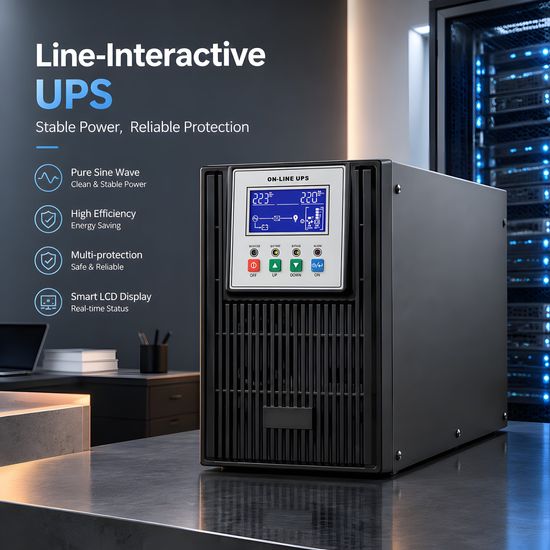


Selecting a 2Kva UPS requires a deep dive into technical architecture and load requirements. First, determine the topology: Online Double Conversion is essential for sensitive medical or server equipment as it provides zero transfer time and pure sine wave output. For less critical office equipment, a Line-Interactive UPS may be more cost-effective. Ensure the unit supports a wide input voltage range (typically 110V-300V) to handle unstable power grids without depleting the battery. Additionally, verify the Power Factor (PF); a PF of 0.9 or 1.0 is superior to 0.7, as it allows for more actual wattage (W) to be supported by the 2000VA capacity.
To ensure international market access and operational safety, the UPS must adhere to CE (EN62040-1) for safety and EN62040-2 for Electromagnetic Compatibility (EMC). For the North American market, UL 1778 certification is a prerequisite. Furthermore, the internal batteries should have MSDS (Material Safety Data Sheet) and UN38.3 test reports to facilitate international shipping. Always check for RoHS compliance to ensure the product is free from hazardous substances like lead and cadmium.
Buyers should look for units featuring High-Rate Lead-Acid (VRLA) or Lithium Iron Phosphate (LiFePO4) batteries, the latter offering a longer lifespan (8-10 years) and higher thermal stability. Prioritize models with Hot-Swappable battery designs to allow maintenance without shutting down connected loads. Advanced features like ABM (Advanced Battery Management) can extend battery life by up to 50% through intelligent charging cycles. For scalability, ensure the UPS has an External Battery Pack (EBP) connector to increase backup runtime as business needs grow.
Modern 2Kva UPS units must offer robust connectivity. Look for SNMP card slots for remote network management, allowing IT teams to monitor power status via a web browser. USB and RS232 ports are standard for local shutdown software. For industrial environments, Dry Contact ports are vital for integration with Building Management Systems (BMS). Ensure the supplier provides free monitoring software compatible with Windows, Linux, and VMware environments.
The most significant risk involves Battery Logistics Regulations. UPS units contain batteries, which are classified as Dangerous Goods (Class 9). To mitigate this, ensure your supplier provides proper UN-rated packaging and works with freight forwarders experienced in battery handling. Another risk is Voltage and Plug Incompatibility; always confirm the destination country's voltage (110V vs 220V) and frequency (50Hz vs 60Hz), and request the correct output socket types (NEMA, Schuko, or Universal) before production.
When negotiating on Made-in-China.com, leverage volume by requesting tiered pricing (e.g., discounts for 50+ or 100+ units). To secure the transaction, use secured payment methods and request a Pre-Shipment Inspection (PSI) by a third party like SGS or Intertek to verify the load bank test results and build quality. For long-term partnerships, negotiate a 1-2% spare parts kit (including power boards and fans) to be included in the bulk order to handle immediate warranty claims locally.
Due to the weight of the lead-acid batteries and copper transformers, Sea Freight (LCL or FCL) is the most economical method for 2Kva units. Ensure the HS Code (typically 85044030) is correctly declared on the Commercial Invoice to avoid customs delays. For urgent samples, Air Freight is possible but requires a Non-Dangerous Goods Declaration if the batteries are disconnected or meet specific PI967/PI971 criteria. Always clarify Incoterms (FOB or CIF) to define exactly where the risk transfers from the supplier to you.